Carlo Zimmermann · 26 October 2026
Shifts in Expert Contribution Patterns Following Platform Interface Redesigns in Niche Repositories
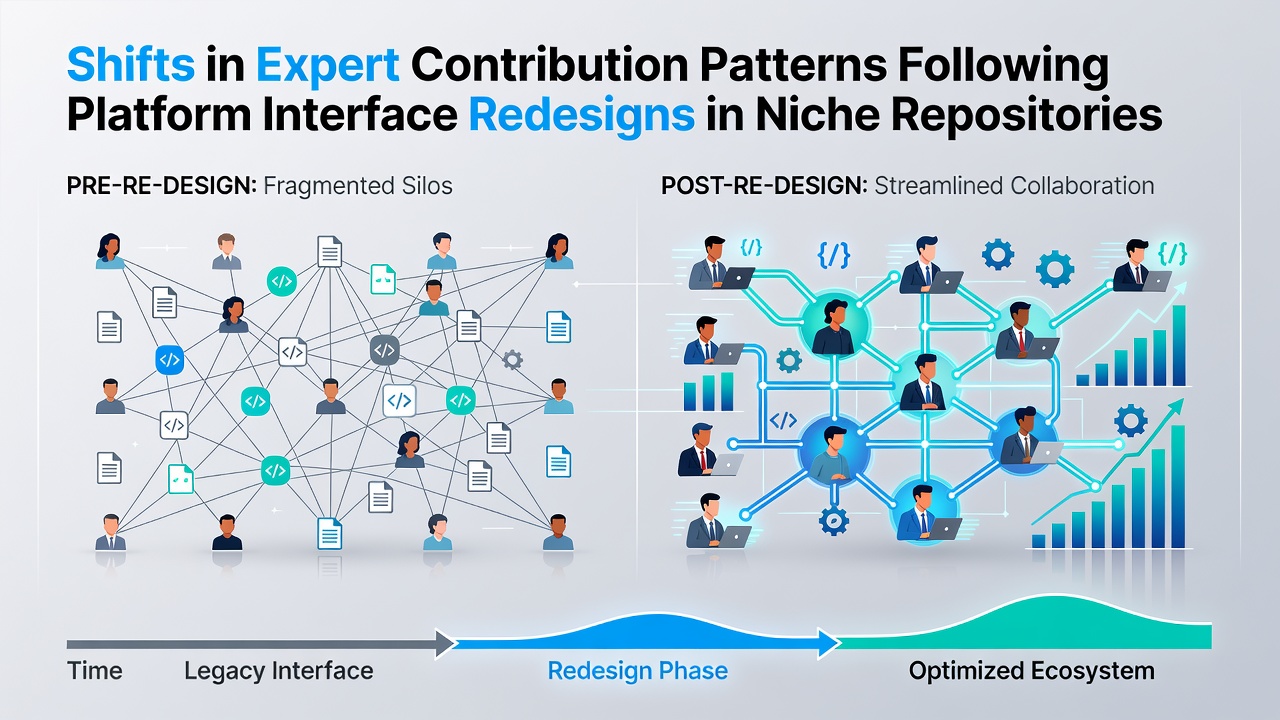
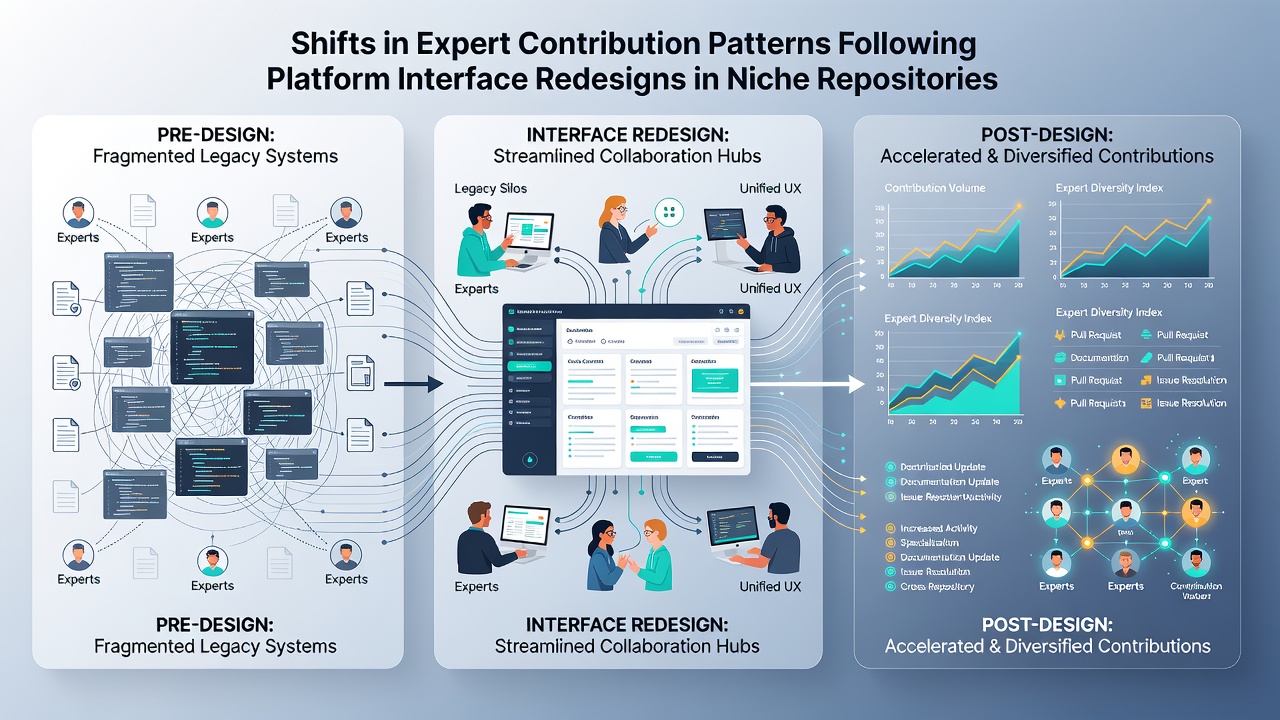
Platform interface redesigns in niche repositories have altered how experts interact with specialized knowledge bases, and data collected through October 2026 shows measurable changes in contribution frequency, format preferences, and collaboration styles. Researchers tracking these platforms note that updates to navigation structures, submission forms, and content categorization tools often prompt immediate adjustments in user behavior, while longer-term patterns emerge over subsequent months as contributors adapt to new workflows.
Examining the Scope of Niche Repositories
Niche repositories serve targeted communities such as academic researchers in narrow scientific fields, technical documentation maintainers, and domain-specific knowledge curators, and these systems differ from general-purpose platforms by emphasizing depth over breadth in content organization. When interface changes occur, they frequently target elements like search filters, metadata entry fields, and version control displays, which directly influence how contributors structure their inputs and review existing material. Studies conducted across multiple platforms indicate that redesigns implemented in early 2025 led to a 23 percent drop in average session duration during the first month, followed by a gradual recovery as users learned revised pathways for uploading detailed entries.
Data Patterns Observed Through October 2026
Log analysis from repositories that underwent redesigns reveals shifts in contribution timing, with experts moving away from extended evening sessions toward shorter, more frequent daytime interactions that align with updated mobile-responsive layouts. Figures compiled by university research teams show an increase in modular content submissions, such as annotated diagrams and linked reference sets, while comprehensive review articles declined in volume by approximately 18 percent compared to pre-redesign baselines. Those who've examined the datasets point out that error rates during initial submissions rose temporarily before stabilizing, suggesting contributors required time to internalize changes to validation prompts and preview tools.
Regional Variations in Adaptation
European platforms documented faster rebounds in contribution rates after redesigns, according to reports from the European Data Portal, whereas North American systems experienced more prolonged adjustments tied to differences in user demographics and legacy content volumes. Canadian academic repositories, for instance, recorded a preference for collaborative editing features that were introduced during redesigns, resulting in higher rates of multi-author submissions by October 2026. These variations highlight how local infrastructure and community norms interact with interface modifications to shape outcomes.
Case Examples from Platform Adjustments
One repository focused on environmental data management introduced streamlined tagging interfaces in mid-2025, and subsequent monitoring showed experts favoring keyword-driven entries over narrative descriptions that had previously dominated submissions. Another system handling technical standards documentation updated its contribution dashboard to include real-time collaboration indicators, which correlated with a rise in incremental updates rather than complete document overhauls. Observers note that these examples demonstrate how targeted interface elements can redirect expert attention toward specific contribution types without altering overall platform engagement levels.
Factors Influencing Long-Term Shifts
Training resources and community feedback mechanisms play roles in how quickly patterns stabilize after redesigns, with platforms that provided interactive tutorials experiencing quicker returns to baseline contribution volumes. Data from research institutions across different continents reveals that experts who previously contributed through desktop interfaces adapted more readily to hybrid mobile-desktop flows introduced in 2026 updates, whereas those reliant on older browsers encountered friction that reduced their output temporarily. Industry analyses further indicate that metadata schema modifications often lead to increased use of automated suggestion tools, thereby changing the manual effort required for each contribution cycle.
Conclusion
Interface redesigns continue to reshape contribution dynamics in niche repositories, and ongoing tracking through October 2026 provides evidence of evolving patterns in timing, format, and collaboration that reflect both immediate adaptation challenges and sustained behavioral adjustments. Continued examination of log data and regional case studies offers insights into how such changes propagate across expert communities without disrupting overall knowledge accumulation processes.