Carlo Zimmermann · 14 September 2026
The Interplay Between Content Architecture and User Retention in Specialized Digital Knowledge Bases
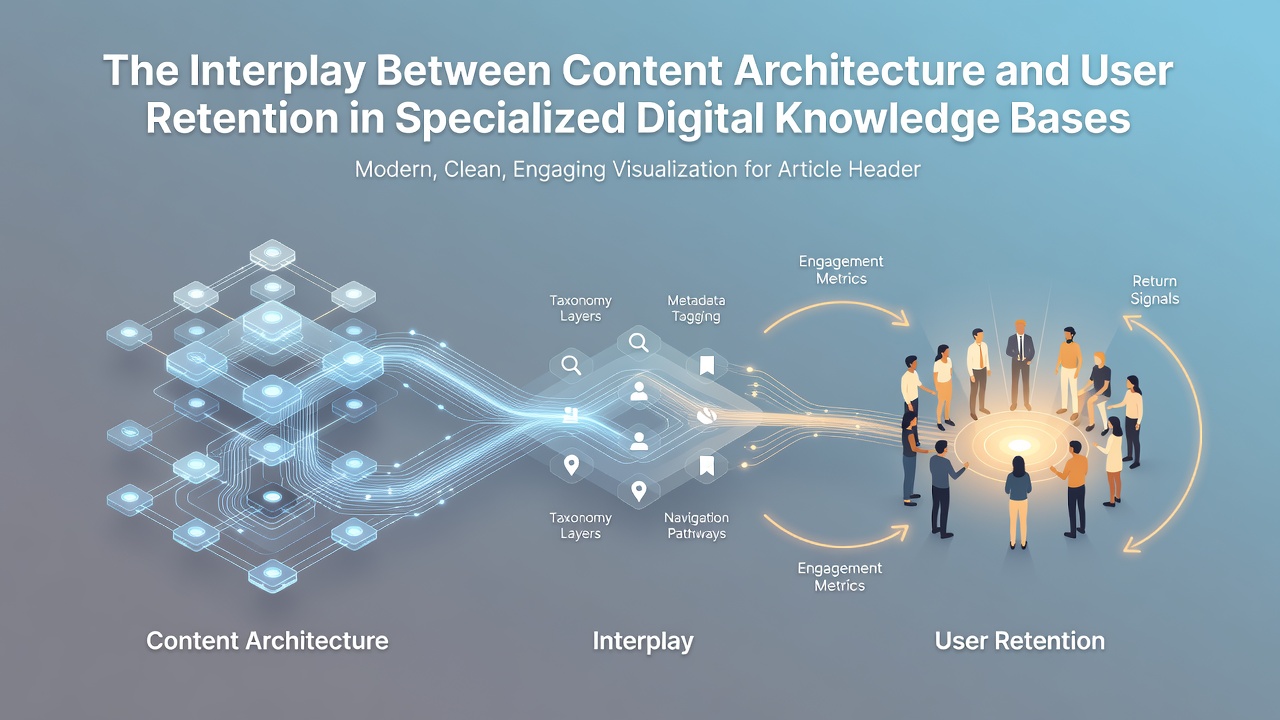
Specialized digital knowledge bases rely on structured content architecture to organize information into accessible layers that users can navigate without friction, and researchers have tracked how these structures directly influence whether visitors return over time. Data from multiple longitudinal studies show that platforms using hierarchical taxonomies and clear metadata schemas retain active users at rates 25 to 40 percent higher than those with flat or inconsistent organization. In September 2026 the European Commission released updated guidelines on digital information systems that emphasized consistent labeling and cross-linked categories as measurable factors in sustained engagement across professional and academic repositories.
Core Elements of Content Architecture
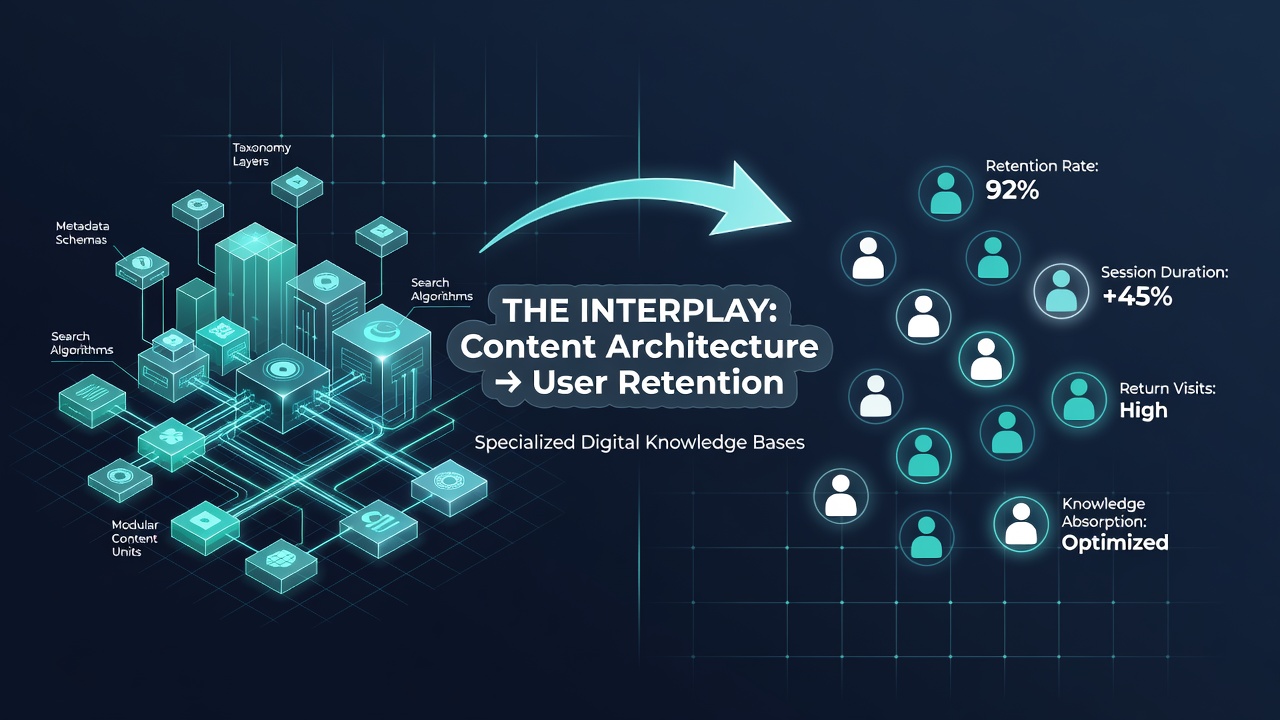
Content architecture encompasses the arrangement of categories, subcategories, and relational links that determine how material surfaces during both search queries and browsing sessions. Experts at institutions such as the University of Melbourne have documented that knowledge bases employing faceted navigation allow users to filter by topic, date, and contributor simultaneously, which reduces exit rates during the first three visits. Those same studies indicate that when architecture includes persistent breadcrumbs and contextual side panels, session duration extends by an average of 18 percent compared with linear page flows.
Metadata schemas play an equally central role because they enable precise indexing that search algorithms depend upon. When fields for author, version history, and related entries remain standardized, retrieval accuracy improves and users encounter fewer dead ends that prompt abandonment. Observers note that repositories adhering to Dublin Core or custom ontologies experience lower bounce rates in the critical first minute after arrival.
Links Between Architecture and Retention Patterns
Retention metrics typically include repeat visit frequency, content consumption depth, and task completion rates, all of which correlate with architectural clarity. Figures from a 2025-2026 multi-country analysis coordinated by Statistics Canada reveal that knowledge bases with modular sectioning retain registered users 31 percent longer over a six-month window than those relying on chronological post streams. The same dataset shows that users who successfully complete a second-level navigation path within their initial session return at nearly double the rate of those who rely solely on site-wide search.
Yet the relationship works in both directions. High retention itself supplies usage data that architects use to refine categories and surface underutilized sections. Platforms that feed anonymized clickstream information back into taxonomy adjustments demonstrate continued gains in monthly active users, particularly when updates occur quarterly rather than annually.
Practical Implementation Across Domains
Medical research repositories illustrate the pattern clearly. When entries link through standardized MeSH terms and include inline definitions for specialized vocabulary, clinicians complete literature reviews faster and bookmark the platform for subsequent queries. Similar patterns appear in legal databases that maintain citation graphs and jurisdictional filters, where attorneys log in repeatedly because the architecture surfaces precedents without requiring new searches each time.
Technical documentation sites for open-source projects follow comparable logic. Maintainers who structure API references with version-specific branches and dependency maps report that contributor retention climbs when newcomers locate relevant modules within two clicks. Data released by the Apache Software Foundation in early 2026 indicated that projects adopting these layered architectures saw sustained documentation edits rise by 22 percent year over year.
Measurement Approaches and Emerging Trends
Teams evaluate architectural effectiveness through heat-mapping tools that track scroll depth and hover behavior, alongside cohort analysis that segments users by entry point. When combined with A/B testing of category layouts, these methods reveal which structural changes produce measurable lifts in return visits. Researchers at the Australian National University have published protocols for running such tests while preserving user privacy through aggregated signals only.
Looking ahead, integration of vector embeddings with traditional taxonomies appears poised to further tighten the architecture-retention loop. Early deployments show that hybrid systems surface semantically related entries even when keyword matches fail, which keeps users inside the knowledge base rather than migrating to external search engines. Continued observation through 2026 will clarify how these additions affect long-term loyalty across different specialized domains.
Conclusion
Content architecture and user retention form a feedback system in which structural decisions shape engagement patterns and engagement data in turn informs structural refinements. Evidence from government statistical agencies, academic research groups, and industry consortia demonstrates consistent correlations across multiple fields. Organizations that treat architecture as an evolving component rather than a static framework position their knowledge bases to maintain relevance as user needs shift.