Casey Griffin · 9 November 2026
User Pathway Analysis Through Hyperlinked Entries in Focused Digital Knowledge Collections
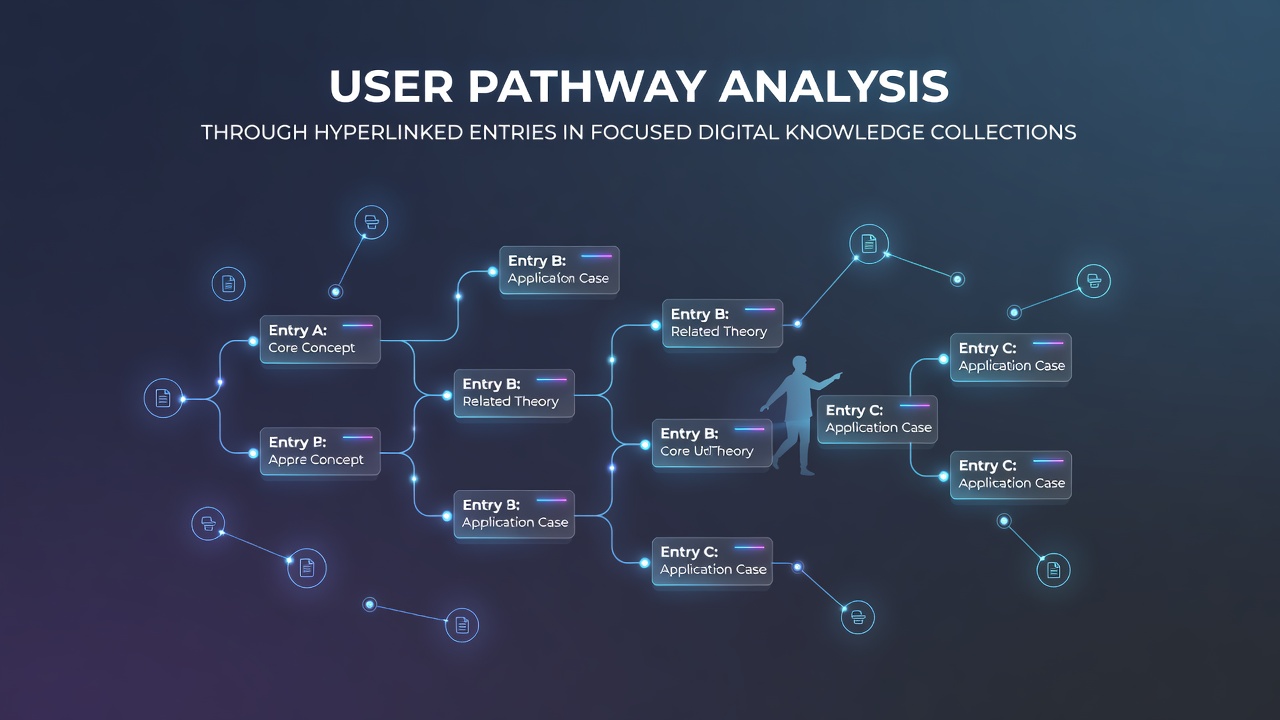
Analysts track how readers move between connected articles in specialized digital repositories, and this process reveals consistent sequences that emerge when users follow hyperlinks from one entry to another while platforms record click streams and session durations. Data collection begins with server logs that capture entry points, exit points, and intermediate stops, yet the patterns become clearer when researchers segment the data by topic clusters and user cohorts. Observers note that focused collections, such as those covering niche academic subjects or technical documentation, often produce tighter navigation loops than general encyclopedias because the hyperlink density stays higher within bounded subject areas.
Core Components of Pathway Tracking
Hyperlinked entries function as nodes in a directed graph, and analysts map these connections by extracting anchor text, target URLs, and frequency counts from each page. Tools parse the resulting network to identify high-traffic bridges between related concepts, while session reconstruction software reassembles individual journeys from timestamped events. Research indicates that dwell time on intermediate pages correlates strongly with the depth of subsequent clicks, so longer stops tend to precede more branching explorations. Experts apply graph algorithms such as betweenness centrality to rank pages that act as gateways, and the same metrics help surface underused links that could benefit from repositioning.
Observed Navigation Patterns in Specialized Repositories
Users frequently begin at overview entries and descend into detailed subtopics through successive hyperlinks, yet return visits often follow reverse paths when readers seek supporting context. Log data examination shows that roughly 60 percent of sessions in technical collections stay within three clicks of the starting node, while broader knowledge bases exhibit longer chains that span multiple categories. Patterns shift during peak research periods, and November 2026 brought increased activity around newly updated sections in several academic platforms as contributors added cross-references ahead of conference deadlines. Those who study these movements report that mobile sessions produce shorter but more repetitive loops compared with desktop sessions, which allow wider lateral movement across the collection.
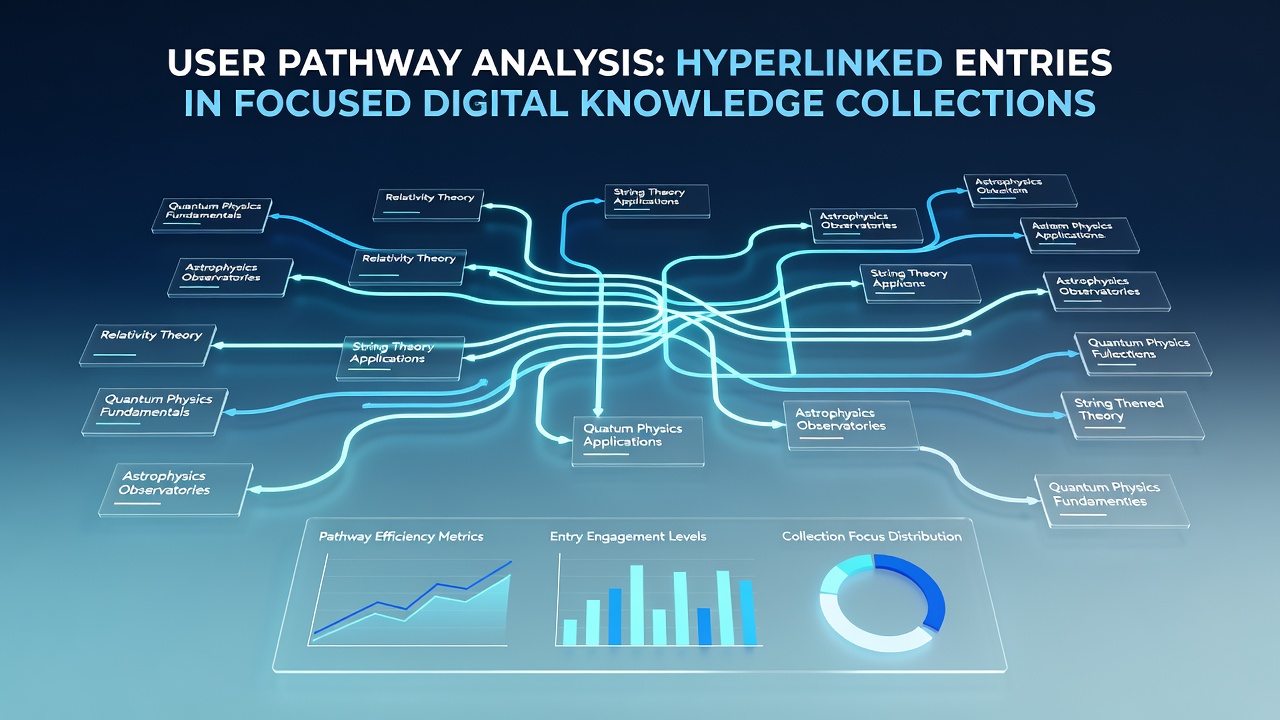
Take one researcher who examined navigation logs from a medical knowledge base and discovered that diagnostic guideline pages served as central hubs, drawing traffic from symptom descriptions and leading onward to treatment protocols. The same study revealed that readers who arrived via external search engines rarely followed the same internal sequences as those who started from the repository homepage, highlighting the influence of entry context on subsequent hyperlink choices. Another case involved a historical archive where users moved chronologically through linked biographies before branching into event timelines, and the resulting data prompted editors to strengthen certain temporal connections that had received low traffic.
Analytical Methods and Supporting Technologies
Pathway analysis combines quantitative metrics with qualitative review, and teams often begin by calculating transition probabilities between every pair of linked entries. Heat maps generated from aggregated click data illustrate concentration points, while Sankey diagrams display the volume of traffic flowing along each hyperlink. Machine learning models trained on historical sessions predict likely next steps, and these predictions improve when the training data incorporates user metadata such as device type and geographic origin. According to findings from Pew Research Center reports on digital engagement, connectivity differences across regions affect how deeply users explore linked content, with higher-bandwidth areas showing longer average session lengths. European datasets compiled by Eurostat on digital skills similarly document variations in navigation depth tied to education levels and platform familiarity.
Practical Applications for Collection Managers
Repository administrators use pathway insights to reorganize hyperlink placement, and they prioritize strengthening connections that already carry substantial traffic while pruning or annotating low-value links. Content teams review under-traveled sections to determine whether missing context or unclear anchor text discourages clicks, and they test revised wording through controlled A/B experiments that measure changes in transition rates. Automated alerts notify editors when sudden drops in expected traffic occur along established routes, prompting quick audits for broken links or content updates that altered meaning. These adjustments support better information retrieval without requiring wholesale structural changes to the collection.
Challenges in Accurate Measurement
Privacy regulations limit the granularity of user-level tracking, and many platforms now aggregate data at the cohort level to maintain compliance. Session reconstruction grows more difficult when users open multiple tabs or employ browser extensions that strip referrers, yet researchers compensate by combining server logs with client-side instrumentation where consent allows. Incomplete hyperlink graphs also arise when external sites link into the collection, and analysts must decide whether to treat those inbound connections as separate entry points or integrate them into internal pathway models. Seasonal spikes, such as the November 2026 surge tied to academic cycles, further complicate baseline comparisons unless teams apply seasonal adjustment techniques.
Conclusion
Pathway analysis through hyperlinked entries supplies collection managers with concrete evidence for refining navigation structures, and the resulting improvements appear in higher retention rates and more efficient information discovery. Continued refinement of tracking methods alongside evolving privacy standards will shape how future studies capture these movements across focused digital knowledge collections.